Astrup Fearnley Museet for Moderne Kunst

Ólafur Eliasson

b. 1967, Copenhage, Denmark
lives and works in Berlin

The Danish-Icelandic artist Ólafur Eliasson creates artworks which enfold the viewer in a productive dialogue. His works consist of immaterial phenomena that shape social relations and cognitions transcending the receiver's traditionally passive visual meeting with works of art.

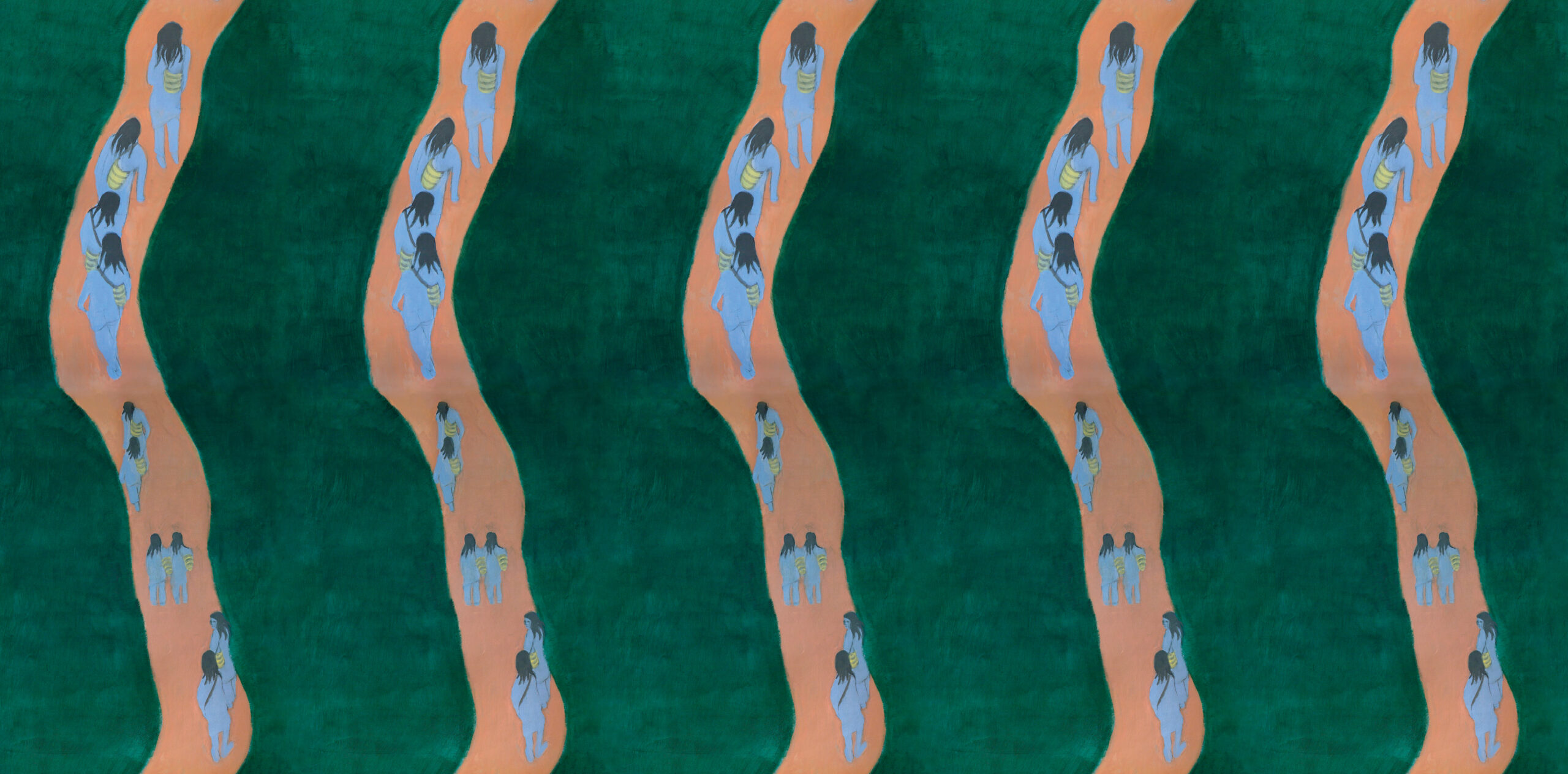
One of the artist's well-known early works was entitled Spotlight: Eliasson made a hole in the gallery roof that opened up a literal and direct connection between the gallery room and nature beyond, between humans and the unfeigned sunlight. The work related itself to the art institution, to the understanding of the work of art as a material physical entity, and to the earth and its rotation around the sun. Already here Eliasson addressed questions that, to a large degree, have occupied him in his subsequent production. Another of his well-known works is The Green River (2000), in which Eliasson dyed one of the rivers of Stockholm green. Newspaper pictures the day after the event were spectacular. In the course of a few seconds, the beautiful languid river was suddenly dominated by an intense green colour, both stunning and frightening. The artwork was not announced in advance, an important aspect of the process, for a pre-announced art-event would have created expectations and determined the norms for reception and interpretation of the work. Instead, Eliasson wanted to create a phenomenon that challenged people's understanding of reality and problematized human presence in the world. Since then he has coloured rivers green in several cities (in 1998 he was invited to Moss in connection with the first Momentum Exhibition), and has continued to register how communities understand a phenomena they cannot initially identify.

Ólafur Eliasson has often been referred to as a nature-romanticist, an artist who manipulates and comments upon nature. Actually, he is not really concerned with the natural environment as such, but wishes to work with dematerialised phenomena in order to avoid his art becoming formalized and categorized, thus loosing its potential for directly engaging the public. Eliasson wants to place the receiver in the centre, and this he achieves by displacing the work of art as a physical object with radically transient elements such as steam, wind, odour, lava or moss. Furthermore, he would like to displace the concept of the work of art with a situation that encourages participation and relates with the human experience of time. This situation cannot arise without a human presence, thus human engagement is what defines the work of art. If one tries to imagine that the architecture and the situation are the subject; then the receiver becomes the exhibition object, in continuous movement, dynamic and participatory.

Light is perhaps Eliasson's most important medium because it is non-material and can bring into being different moods. We cannot avoid the yellow light in Room for One Colour (2002). The light envelopes us and limits our ability to see the spectral colours. In the yellow room all other colours disappear because of the monochromatic waves of light. And since the eye will try to compensate through its ability to simultaneously physiologically create complementary colours, we will eventually sense that the yellow colour disappears and everything seems white.

Light has always been an important element in art and architecture, as a symbol for the divine or as a dramatic element. In Eliasson's work, light becomes a social phenomenon. The yellow light affects our perception of all our surroundings; it functions as an analogy that allows us to understand human presence and challenges our conventional routines for interaction and communication.

The theory of how the eye manages colour correlates with a certain scientific understanding of reality as a constant and structured entity. For this reason, Eliasson is concerned to challenge our understanding of colour since, through an experience of art, we can reflect over how we interact with our own environment. In this exhibition, participants are confronted with phenomena of light in a way that influences our understanding of ourselves in space in different ways. Particular works can be describes as aesthetic moveable machines, where the play of colour and mirrored surfaces reminds us of our own presence and emphasizes what it is to see oneself see. In other situations, the immediate and physical experience will appear at the same time as a possible interpretation, and provoke a natural physical reaction.

Eliasson utilizes scientific methods in his effort to create new phenomena that activate the participant and instigate new processes of communication. It is probably no accident that he has gathered much of his inspiration from collaborating with architects: such people are always thinking about human interaction, and have, according to Eliasson, a fascinating ability to develop quickly and be constantly moving. One could easily find an affinity between Eliasson's art and architectonic practices, such as Paolo Soleris' ecological ideals, or the pragmatic-technological approach of Richard Buckminster Fuller. Inspired by these notable humanists, Eliasson's art can be described as a good example of the contemporary view that it is important to research and develop human perceptual capacities. Nevertheless, this artist conducts his experiments independently from contemporary technological imperatives.

Even though his works are based on complex scientific knowledge, Eliasson's main concern is to uncover relationships and reveal constructions. In the exhibition The Weather Project, presently on view at the Tate Modern (lasting through March 21), Eliasson has created a large “sun”. Yet the sun is actually just a half-lit disk that reflects itself in the mirror-covered ceiling. Participants can discover for themselves how the construction works. The artist wishes neither to deceive the viewer, nor to moralize. Rather, he wants to make models that contradict essentialism, and to emphasize the significance of the differences between human beings.


From an art historical perspective, it is possible to draw parallels in several directions: On the one hand, Eliasson is inspired by artists such as Victor Vasarely, who during the 1960's, challenged human apperception through his geometrical Op-Art. On the other hand we can find prototypes for Eliasson in modern artists who are also concerned to dematerialise the work of art, such as Robert Irwin and James Turrell. Much of today's art can display great visual diversity, stemming from the artist's desire to free their works from formalized norms, while as yet these artworks may share clear similarities in content. For this reason it is possible to compare Eliasson's art with that of artists such as Rirkrit Tiravanija and Felix Gonzalez-Torres, who also invite viewers to take part in a social event. Olafur Eliasson is one of our era's most prominent artists who, through his beautiful and fantastic works, creates situations which invite our participation and engagement.


marg
opp
ned
Visiting address: Dronningensgt 4, Oslo Postal address: Box 1158, 0107 Oslo Phone: +47 22936060 Fax: 22936065 E-mail:info@fearnleys.no
Supported by the Thomas Fearnley, Heddy and Nils Astrup Foundation